GUIDING CHINA'S GILDED AGE

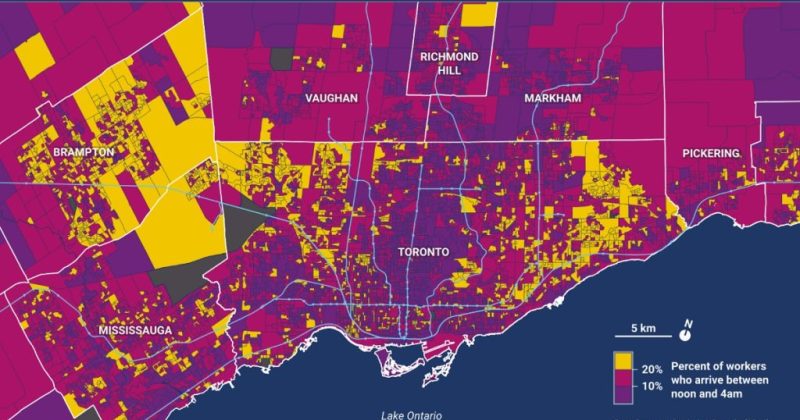
CURS Fellow Dr. Yan Song and the Program on Chinese Cities are featured in the latest edition of Carolina Arts & Sciences magazine. Imagine if Myrtle Beach morphed into a megacity double the size of New York City in just three decades. Impossible? Not in China. Read the article to learn how Dr. Song is working to help China rethink its urban upheaval.

THE SOCIAL SAFETY NET IN THE WAKE OF THE GREAT RECESSION

Dr. Maureen Berner, Professor of Public Administration and Governement (UNC-CH)

April 12, 12:30-1:45 p.m., Hickerson House

While the economy may be stabilizing, the number of people seeking assistance continues to
rise. Is the social safety net holding? According to recent national reports, it is, but Dr. Berner’s
analysis of data from North Carolina suggests this is only because of a dramatic response by
community level non-profit partners. Dr. Berner will discuss the social safety net, the role of local
non-profits, and how much the safety net can bear before breaking.

If you have any questions or need directions, contact Todd Owen at 919-962-3076 or towen@email.unc.edu.  See attached flyer for distribution to
interested colleagues or students.

SAVING THE PAST BY INVESTING INTHE FUTURE: NEW APPROACHES TO COMMUNITY-BASED HERITAGE PRESERVATION IN PERU

Dr. Brian Billman, Associate Professor of Anthropology (UNC-CH) and Executive Director of MOCHE, Inc.

February 27, 12:30-1:45 p.m., New East Reading Room

Preserving cultural heritage sites, developing disaster prevention plans, and creating livable public spaces in Peru is complicated by the politics of squatter communities, weak local governments, political corruption, and ineffective land-tenure laws.  Dr. Billman will present an overview of strategies used by MOCHE, Inc to preserve heritage and improve the lives of members of poor communities in the Moche Valley on the north coast of Peru.

If you have any questions or need directions, contact Todd Owen at 919-962-3076 or towen@email.unc.edu.  See attached flyer for distribution to
interested colleagues or students.

DRIVING DETROIT: THE QUEST FOR RESPECT INTHE MOTOR CITY

Dr. George Galster Hilberry Professor of Urban Affairs, Wayne State University

February 15, 12:30-1:45 p.m., New East Reading Room

Detroit is the international icon for a once-thriving industrial powerhouse transformed within half a century into a dysfunctional metropolis.  In his new book, Driving Detroit, George Galster paints a stunning portrait of Metropolitan Detroit through an eclectic application of urban planning, economics, sociology, political science, geography, history, and psychology. Among the topics up for discussion are the region’s geopolitical environment, evolving economic and population patterns, and longstanding inter-class and inter-racial struggles.

If you have any questions or need directions, contact Todd Owen at 919-962-3076 or towen@email.unc.edu.  See attached flyer for distribution to
interested colleagues or students.

Announcing the Fall 2013/Spring 2014

CURS Scholar-in-Residence Opportunity

With support from the Dean’s Office, College of Arts & Sciences, the Center for Urban & Regional Studies (CURS) is pleased to solicit applications again for its Scholar-in-Residence Program.  The CURS Scholar-in-Residence Program provides an opportunity for faculty members in the College of Arts & Sciences to concentrate on developing major research proposals by providing funds for a course buyout and for proposal development expenses.  In addition, the CURS Scholar-in-Residence will have full administrative support from the Center’s financial and clerical support staff.  This opportunity will be provided during either the fall semester 2013 or spring semester 2014 based on the candidate’s preference. Click here for an application and complete details of the program.

Applications are due no later than 5:00 p.m., Monday February 11, 2013.  The candidates will be notified of the outcome of the selection process in late February 2013.  

For further information or an application contact:
Todd Owen, Associate Director
Center for Urban and Regional Studies
Hickerson House; CB# 3410
Phone:  (919) 962-3076   Fax:  (919) 962-2518


THE NEW WHITE FLIGHT:
GEOGRAPHIES OF RACE AND THE POLITICS OF EDUCATION IN SILICON VALLEY SCHOOLS

Dr. Willow Lung-Amam, Postdoctoral Research Fellow in the Department of City and Regional Planning

WIn 2005, a Wall Street Journal article, entitled “The New White Flight,” rocked Cupertino, California, the community about which the article was written.  The article argued that whites were leaving Asian-dominated Silicon Valley schools that they perceived to be too competitive and narrowly focused on academics, especially math and science.  Scholars remained relatively strangely silent on the issue.  In a case study of Mission San Jose High in the Silicon Valley suburb of Fremont, Dr. Lung-Amam found significant evidence for the “new white flight” thesis, its causes, and affects on neighborhood race relations and school policy.  In her talk, Dr. Lung-Amam will discuss how this case challenges the way that scholars have typically approached the issues of race and segregation in schools from the perspective of black/white, urban/suburban divides and shows how the politics of race and education are shifting in the face of increasing diversity in contemporary suburbia.  Her findings underscore the need for discourses about equity in schools to go beyond questions of access and integration to white suburban schools, to include questions about different educational values and ideas about a quality education and the presumed desirability of racially “balanced” schools.

If you have any questions or need directions, contact Todd Owen at 919-962-3076 or towen@email.unc.edu.  See attached flyer for distribution to
interested colleagues or students.

The Research Triangle: From Tobacco Road to Global Prominence

William M. Rohe | University of Pennsylvania Press | 20% discount!

Written by CURS Director, Bill Rohe, The Research Triangle describes the history, current challenges, and future prospects of this fascinating metropolitan area. Focusing on the personalities and perspectives of key actors in the development of the region, the author traces the emergence of the Research Triangle Park and its role in the region's economic transformation. He also addresses some of the downsides of development, illustrating the strains that explosive population growth has placed on the region's school systems, natural resources, transportation infrastructure, and social cohesion. As Rohe shows, the Research Triangle is not a city in the traditional sense but a sprawling conurbation whose rapid, low-density growth and attendant problems are indicative of metropolitan life in much of America today. Although the Triangle's short-term prospects are bright, Rohe warns that troubling issues loom--the region is expected to add nearly a million residents over the next two decades--that need to be addressed through improvements in governmental cooperation, regional planning, and civic leadership. Finally, the author outlines key lessons that other metropolitan areas can learn from the Research Triangle's dramatic rise to prominence.

To order now and receive a 20% discount, click here.

The Charlotte Housing Authority's Moving Forward Program: Early Implementation and Baseline Data Evaluation

The Moving to Work Demonstration program (MTW) enacted by Congress in 1996, affords selected public housing authorities the flexibility to design and test innovative ways to provide low-income families with decent, affordable housing.  Participating housing authorities are guided by three program goals: to achieve greater cost effectiveness; to increase the housing choices for low-income households; and to assist participating households in achieving self sufficiency.  The Charlotte Housing Authority (CHA) has been chosen as one of the thirty-five public housing authorities to participate in the MTW program.  CHA contracted with the Center for Urban & Regional Studies to conduct a long-term evaluation of their MTW program, Moving Forward.  The Center's recently completed interim report, The Charlotte Housing Authority’s Moving Forward Program: Early Implementation and Baseline Data Evaluation presents a description of the CHA’s Moving Forward Program and an early assessment of its implementation.

Program on Chinese Cities / CURS Launches UNC-PKU Consortium

Center Director Bill Rohe and the Program on Chinese Cities Director Yan Song recently traveled to Beijing to formally launch the UNC-Peking University Consortium for Urban and Regional Planning and Management.  Rohe, Song, and four UNC colleagues participated in a two-day symposium to present research and explore opportunities for future collaborations. The purpose of this consortium is to create opportunities for scholars and graduate students at both UNC and PKU to work together on research, education, and training activities. See the Program on Chinese Cities website for more information on the consortium and the symposium.

Impacts of Land Use Strategies on Travel Behavior in Small Communities and Rural Areas

CURS Senior Research Associate Brian Morton recently received a $649,995 grant from the Transportation Research Board to study the impacts of land use strategies on travel behavior in small communities and rural areas.  Morton and City and Regional Planning professors Daniel Rodriguez and Yan Song will develop methods and provide an assessment of the impact of land use, development patterns, and the associated economic activities on travel behavior in small communities and rural areas.  For more information contact Brian Morton at bjmorton@email.unc.edu 

CURS Policy Briefs

The Center for Urban & Regional Studies offers Policy Briefs to summarize recently completed and timely research critical to issues affecting our region, state, and country. A Long Way from Home: The Impacts of a Limited Supply of Workforce Housing looks at the social, economic, and environmental benefits of providing affordable workforce housing to residents of a community in western North Carolina. The second brief, Weatherization, Rehabilitation, and Asset Preservation (WRAP) Program, addresses how the lack of coordination between weatherization and housing rehabilitation assistance impact the effectiveness of both programs. Watch for links to new Policy Briefs right here as they become available.